Air Dryers Explained: Do You Need One for Your Compressed Air System?
Compressed air dryers play a vital role in protecting compressed air systems from moisture-related damage. As discussed in our previous article on compressed air moisture problems, uncontrolled moisture can lead to corrosion, equipment failure, and unplanned downtime. One of the most effective ways to control moisture is by installing an air dryer. But not every system needs the same setup, and in some cases, a dryer may not be required at all.
This guide explains what air dryers do, the different types available, and how to know if your compressed air system needs one.
What Does an Air Dryer Do?
An air dryer removes moisture from compressed air before it reaches downstream equipment.
When air is compressed, water vapour condenses as the air cools. Without a dryer, that moisture travels through the system and causes long-term issues. Air dryers reduce the moisture content to a controlled level, helping protect pipework, tools, and machinery.
Why Moisture Control Matters
Excess moisture in compressed air can lead to:
-
Internal corrosion in pipework and receivers
-
Damage to pneumatic tools and machinery
-
Poor air quality at point of use
-
Freezing in colder environments
-
Increased maintenance and downtime
An air dryer helps prevent these issues by delivering consistently dry air throughout the system.
Types of Air Dryers Explained
Refrigerant Air Dryers
Refrigerant dryers cool the compressed air to condense and remove moisture before reheating it.
Best suited for:
-
General industrial applications
-
Workshops and engineering environments
-
Most standard compressed air systems
They are reliable, cost-effective, and suitable where extremely dry air is not required.
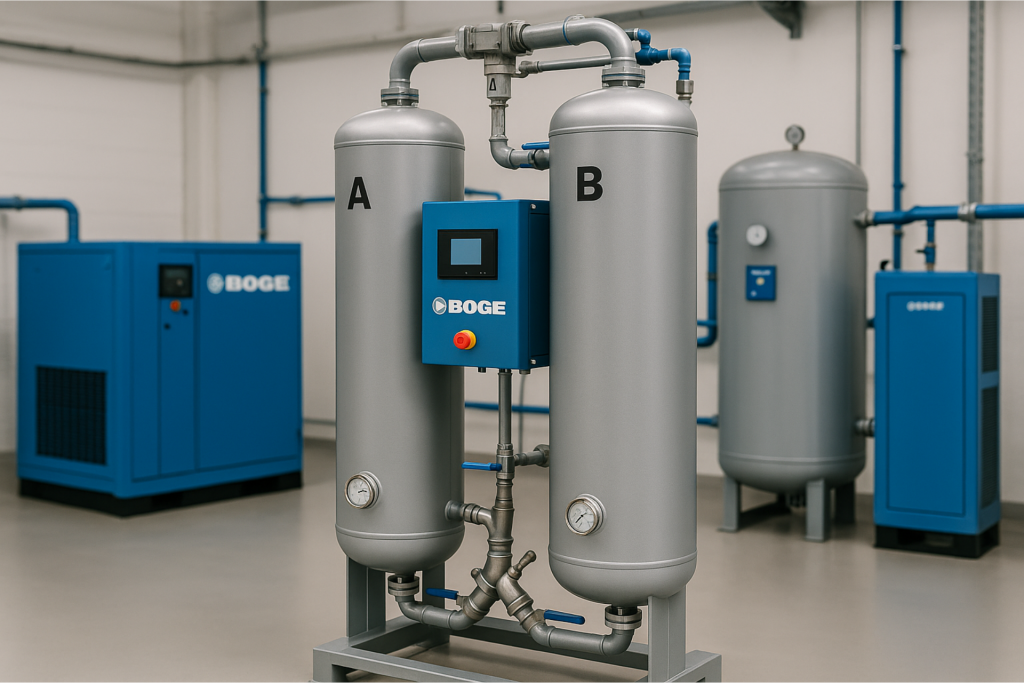
Desiccant Air Dryers
Desiccant dryers use an absorbent material to remove moisture, producing very low dew points.
Best suited for:
-
Applications requiring extremely dry air
-
Outdoor pipework or cold environments
-
Sensitive manufacturing processes
They are more complex and typically used where moisture tolerance is minimal.
Do You Actually Need an Air Dryer?
Not every compressed air system needs a dryer — but many do.
You should strongly consider an air dryer if:
-
You regularly see water at air outlets
-
Tools or equipment are failing prematurely
-
Pipework shows signs of rust or corrosion
-
Air quality is critical to your process
-
The system operates in cold or outdoor conditions
In many cases, moisture problems only become obvious once damage has already occurred.
Choosing the Right Air Dryer
Selecting the correct dryer depends on:
-
Compressor size and airflow
-
Operating pressure
-
Ambient temperature
-
Required air quality
-
Type of application
Using the wrong dryer — or installing one incorrectly — can limit performance and reduce system efficiency.
How PCM Air Power Can Help
At PCM Air Power, we help businesses select and maintain the right air drying solutions for their compressed air systems. From assessing moisture issues to specifying and servicing air dryers, our team ensures systems are protected, reliable, and fit for purpose.
If you’re unsure whether your system needs an air dryer — or whether your current setup is doing the job — expert advice can prevent costly problems down the line. Contact us now.
We are fully BCAS compliant.