Is Your Compressed Air Condensate Being Managed Properly?
Every compressed-air system produces condensate.
As atmospheric air enters a compressor, it brings moisture with it. During compression and cooling, this moisture condenses into liquid water. Depending on the type of compressor and the wider system, the resulting condensate may also contain traces of oil and other contaminants.
Although condensate is a normal part of compressed-air production, poor condensate management can affect system reliability, air quality and operating efficiency.
Where Does Compressed-Air Condensate Form?
Condensate can collect at several points throughout a compressed-air system, including:
- Air receivers
- Aftercoolers
- Refrigerant and desiccant dryers
- Filters and water separators
- Low points within the pipework
- Distribution lines and points of use
If this condensate is not removed effectively, it can travel further into the compressed-air network and reach production equipment.
Why Is Condensate a Problem?
1. It Can Damage Pneumatic Equipment
Moisture entering air tools, cylinders, valves and other pneumatic equipment can contribute to corrosion, sticking components and premature wear.
Over time, this can increase maintenance requirements and shorten the working life of connected equipment.
2. It Can Affect Production Quality
For applications where compressed air comes into direct or indirect contact with products, moisture and contamination can create quality problems.
This is particularly important within food and beverage production, pharmaceuticals, electronics, spraying and other sensitive manufacturing processes.
3. Inefficient Drains Can Waste Compressed Air
Traditional timer-operated drains open at scheduled intervals, whether condensate is present or not.
If they remain open for longer than necessary, valuable compressed air can escape alongside the condensate. Across several drains operating continuously, this can create a significant and often unnoticed source of energy waste.
Modern zero-loss or level-controlled drains only activate when condensate reaches a certain level, allowing liquid to be removed without unnecessarily releasing compressed air.
4. Blocked or Failed Drains Can Cause Wider Problems
A blocked drain may allow condensate to build up inside filters, receivers or dryers.
Signs of a potential drainage problem can include:
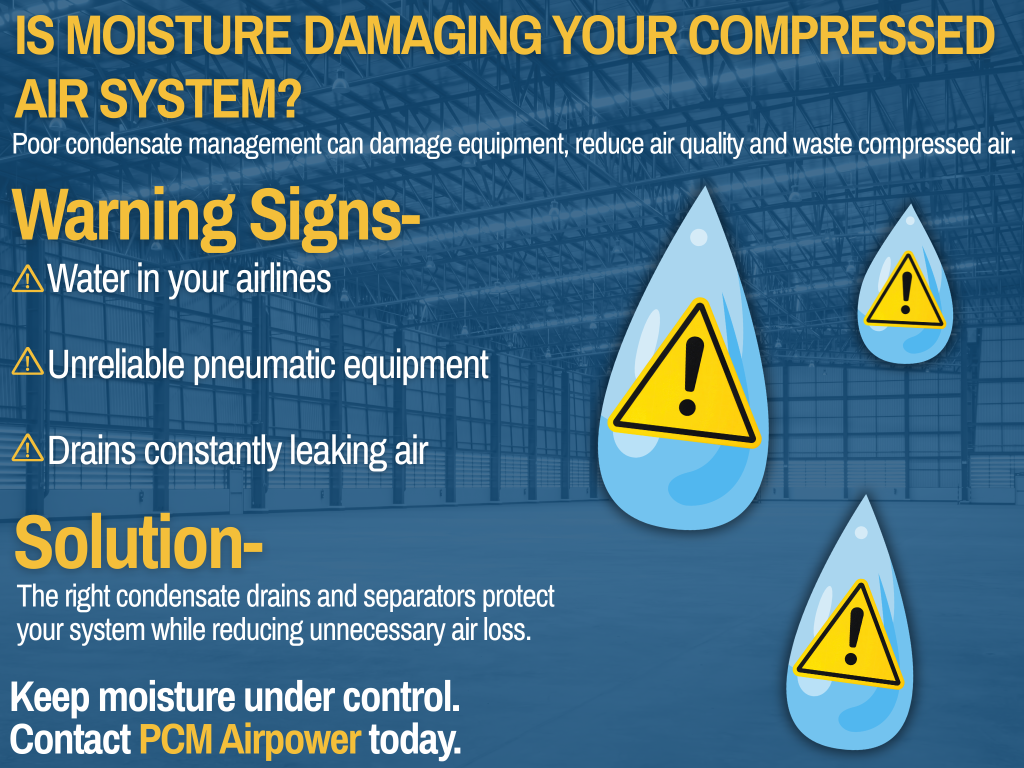
- Water appearing at points of use
- Unusual pressure loss
- Filters filling with liquid
- Corrosion within pipework
- Pneumatic equipment becoming unreliable
- Increased moisture downstream of the dryer
- Drains releasing compressed air continuously
These symptoms should be investigated before they develop into more expensive failures or production disruption.
What Happens to the Condensate After It Is Removed?
Removing condensate from the compressed-air system is only part of the process.
Where oil-lubricated compressors are used, condensate can contain a mixture of water and oil. This may require appropriate treatment before disposal.
Oil-water separators are designed to separate residual oil from the water, helping businesses manage condensate more effectively and reduce the volume of contaminated waste requiring specialist handling.
The correct condensate-management solution will depend on the compressor type, operating conditions, condensate volume and requirements of the individual site.
How Can PCM Airpower Help?
Effective condensate management should be considered as part of the complete compressed-air system rather than as an isolated component.
PCM Airpower can inspect your existing system and identify issues involving:
- Condensate drains
- Air receivers
- Dryers and filtration
- Water separators
- Oil-water separation equipment
- Pipework drainage points
- Compressed-air quality
We can recommend suitable equipment, replace unreliable drains and help ensure condensate is removed efficiently throughout the system.
Keep Moisture Under Control
A small drain may not look like a critical part of your compressed-air system, but its performance can directly affect energy use, air quality and equipment reliability.
Regular inspection and correctly selected condensate equipment can help prevent moisture-related problems, reduce compressed-air losses and protect your wider system.
Noticing water in your compressed-air lines or unsure whether your condensate drains are operating correctly?
Contact PCM Airpower today to arrange a system inspection or discuss your compressed-air requirements.
We are fully BCAS compliant.